Jesus and the Passover – Celebrating as He Did
Note: This post is a chapter from the book A Christ Centered Easter. I hope it blesses you. – Christi
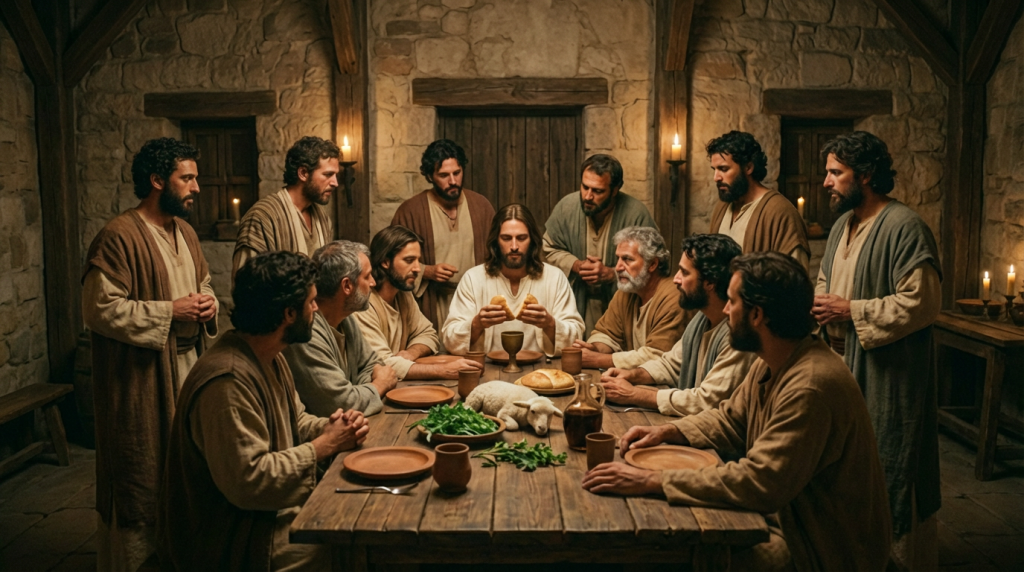
Introduction: The Last Supper in Its True Context
When Jesus gathered with His disciples for that final Passover meal, He wasn’t following the elaborate Seder we know today. The modern Jewish Passover ceremony, with its structured Haggadah and detailed rituals, was developed centuries after Jesus lived. To truly understand what Jesus did that night, we need to step back into the simpler, more ancient celebration of the first century.
The First-Century Passover: What Jesus Actually Experienced
The Biblical Foundation
The Passover Jesus celebrated was rooted directly in Exodus 12, with minimal additions from oral tradition. The core elements were:
- The Passover lamb – sacrificed at the Temple and roasted whole
- Unleavened bread (matzah) – remembering the hasty departure from Egypt
- Bitter herbs (maror) – symbolizing the bitterness of slavery
- Wine – multiple cups drunk throughout the meal
- The Passover narrative – retelling the story of redemption from Egypt
The meal was informal, celebratory, and focused on remembering God’s mighty acts of salvation.
The Four Cups: Ancient Practice
By Jesus’ time, the custom of drinking four cups of wine during the Passover meal was already established. These cups marked different portions of the evening and connected to God’s four promises of redemption in Exodus 6:6-7:
- The Cup of Sanctification (Kiddush) – “I will bring you out from under the burdens of the Egyptians”
- The Cup of Proclamation/Deliverance – “I will deliver you from slavery to them”
- The Cup of Redemption – “I will redeem you with an outstretched arm”
- The Cup of Praise/Completion – “I will take you to be my people”
The Cup of Redemption: Jesus’ Interpretation
The Traditional Third Cup
The Cup of Redemption was drunk after the meal, accompanying the thanksgiving prayer. This cup celebrated God’s redemptive power demonstrated in the Exodus – how He paid the price to free His people through the blood of the lamb.
During this pivotal moment, Jesus transformed the meaning:
“This cup is the new covenant in my blood, which is poured out for you.” (Luke 22:20)
Jesus was declaring:
- He is the true Passover Lamb – His blood would accomplish the ultimate redemption
- A new covenant was beginning – Not replacing the Exodus, but fulfilling and surpassing it
- His blood purchases freedom – From slavery to sin and death itself
When Jesus said “Do this in remembrance of me,” He was placing Himself at the very center of God’s redemptive story. Every future Passover would now point to Him.
The Mystery of the Fourth Cup: Jesus’ Stunning Promise
What Jesus Didn’t Drink
Here’s something that often gets overlooked: Jesus likely never drank the fourth cup that night.
Matthew and Mark both record Jesus saying:
“Truly I tell you, I will not drink again from the fruit of the vine until that day when I drink it new in the kingdom of God.” (Mark 14:25; Matthew 26:29)
Luke records it slightly earlier in the meal:
“For I tell you I will not drink again from the fruit of the vine until the kingdom of God comes.” (Luke 22:18)
The Unfinished Passover
Think about what this means:
- Jesus instituted the Cup of Redemption with His own blood
- But He refused the Cup of Praise/Completion
- His Passover remained unfinished
Why? Because the redemption story wasn’t complete yet
The next day, on the cross, Jesus would cry out “It is finished” – but even then, the full completion awaited. The ultimate fulfillment of Passover – when God’s people are fully gathered, fully redeemed, and fully home – still lies ahead!
The Wedding Feast Promise
Jesus wasn’t simply abstaining from wine. He was making a covenant promise to His disciples:
“I’m not drinking this final cup of celebration now. I’m saving it. I’m waiting. And when I do drink it again, I’ll drink it WITH YOU in My Father’s kingdom.“
This connects to:
- The Wedding Feast of the Lamb (Revelation 19:7-9)
- The Messianic Banquet Jesus spoke of repeatedly
- The restoration of all things when Christ returns
Every time we take communion, we’re participating in an unfinished meal – a Passover celebration that spans from the Last Supper to the Marriage Supper of the Lamb.
A Simple, Christ-Centered Passover Celebration
Why Celebrate Passover as Christians?
- Jesus celebrated it – We walk in His footsteps
- It reveals Christ – The entire ceremony points to Jesus
- It connects us to our roots – Christianity grew from Jewish soil
- It enriches our communion understanding – We see the Last Supper in context
- It orients us toward His return – We join Jesus in waiting for the completed feast
Your Simplified Passover Meal
Here’s a doable way to celebrate Passover focused on Jesus.
What You’ll Need
- Roasted lamb (or chicken or brisket as substitute)
- Unleavened bread/matzah
- Bitter herbs (horseradish or endive)
- Four cups of wine or grape juice per person
- Haroset (optional): apple, nut, and honey mixture symbolizing the mortar used in Egypt
The Celebration Order
1. The First Cup – Sanctification
- Pour the first cup
- Pray: “Blessed are You, Lord our God, who brings us out from bondage and sets us apart as Your people.”
- Drink together
- Discuss: How has God brought your family out of spiritual bondage?
2. The Handwashing (or footwashing)
- Wash hands or feet together (Jesus washed the disciples’ feet here)
- Reflect on how John tells us Jesus did this knowing Judas would betray Him (John 13:2-3). Jesus washed the feet of:
- Peter, who would deny Him
- Judas, who would betray Him
- Disciples who would all abandon Him
This shows that Christ’s service isn’t based on our worthiness, but on His character and mission.
3. The Story
- Read Exodus 12:1-28 together
- Reflect on these verses and let children ask questions
- Explain: “This Passover lamb pointed forward to Jesus, the Lamb of God”
4. The Second Cup – Proclamation
- Pour the second cup
- Proclaim: “God delivered Israel from slavery; Christ delivers us from sin.”
- Share brief testimonies of deliverance (these can be planned ahead of time)
- Alternately, read these passages responsively as a group proclamation
- Leader: “The LORD is my strength and my song; he has become my salvation.” (Exodus 15:2)
- All: “He has delivered us from the domain of darkness and transferred us to the kingdom of his beloved Son.” (Colossians 1:13)
- Leader: “The Spirit of the Lord is upon me, because he has anointed me to proclaim good news to the poor. He has sent me to proclaim liberty to the captives.” (Luke 4:18)
- All: “So if the Son sets you free, you will be free indeed.” (John 8:36)
- Leader: “You are a chosen race, a royal priesthood, a holy nation, a people for his own possession, that you may proclaim the excellencies of him who called you out of darkness into his marvelous light.” (1 Peter 2:9)
- All Together: “We were once slaves to sin, but God delivered us! We were once in darkness, but Christ brought us into light! We were once bound, but Jesus has set us free! Praise His name forever!”
- Then drink the second cup joyfully together.
5. Breaking the Bread
Hold up the unleavened bread
Say Jesus’ words: “This is my body, given for you.”
Break and share the bread
Explain: The bread is unleavened (without sin), striped, and pierced – like Jesus
6. The Meal
- Enjoy the lamb and feast together
- Make it celebratory and joyful
- Remember this is a freedom celebration
7. The Third Cup – REDEMPTION ⭐
This is the most significant moment
- Pour the third cup
- Read Luke 22:19-20 and 1 Corinthians 11:23-26
- Say together: “This cup is the new covenant in Christ’s blood. By His blood, we are redeemed.”
- Reflect silently on the cost of your redemption
- Drink with gratitude and reverence
- Sing a worship song about the blood of Jesus
8. The Fourth Cup – THE PROMISE OF COMPLETION
This is the most powerful and often overlooked moment
- Pour the fourth cup but do not drink it yet
- Have everyone hold their cup
- Read these words of Jesus:
“Truly I tell you, I will not drink again from the fruit of the vine until that day when I drink it new in the kingdom of God.” (Mark 14:25)
“I have eagerly desired to eat this Passover with you before I suffer. For I tell you, I will not eat it again until it finds fulfillment in the kingdom of God.” (Luke 22:15-16)
Leader says:
“Jesus stopped here. He did not drink this final cup of praise and completion. The Passover remained unfinished – because the story of redemption was not yet complete. He went to the cross. He rose from the grave. He ascended to the Father. And now He waits.”
Everyone responds together:
“He waits to drink this cup WITH US at the Marriage Supper of the Lamb, when every tear is wiped away, when death is defeated forever, when we feast together in the New Jerusalem.”
Read together Revelation 19:6-9:
“Then I heard what sounded like a great multitude, like the roar of rushing waters and like loud peals of thunder, shouting: ‘Hallelujah! For our Lord God Almighty reigns. Let us rejoice and be glad and give him glory! For the wedding of the Lamb has come, and his bride has made herself ready. Fine linen, bright and clean, was given her to wear.’ Then the angel said to me, ‘Write this: Blessed are those who are invited to the wedding supper of the Lamb!'”
Leader proclaims:
“We have been invited! The Bridegroom is coming! And when He returns, we will drink this cup together – not in sorrow, but in complete joy; not looking back at the cross, but celebrating face-to-face with our Redeemer!”
Now drink the fourth cup together joyfully
Declare loudly:
“EVEN SO, COME LORD JESUS!”
“MARANATHA – OUR LORD, COME!”
“NEXT YEAR IN THE NEW JERUSALEM!”
Sing hymns of anticipation and praise (as Jesus did in Matthew 26:30):
“O Come, O Come Emmanuel”
“Lo, He Comes with Clouds Descending”
“Christ the Lord Is Risen Today”
Any songs about Christ’s return
9. Closing Declaration
End by saying together:
“Christ our Passover Lamb has been sacrificed for us. His resurrection has begun the new creation. And He will return to finish what He started. We live between the cup of redemption and the cup of completion – already saved, not yet home. Therefore, let us keep the feast with sincerity and truth until He comes!”
The Fourth Cup: Living in the “Already But Not Yet
Why This Matters So Much
When you understand that Jesus didn’t finish the Passover meal, everything about Christian life comes into sharper focus:
We are living in the pause between cups three and four.
- The redemption is accomplished – The third cup is drunk
- The completion is promised – The fourth cup awaits
- We participate in both – Already saved, anticipating glory
- This Changes How We Take Communion
Every communion service becomes:
- A memorial of the cross (the Cup of Redemption already drunk)
- A proclamation of Christ’s death “until He comes” (1 Corinthians 11:26)
- An anticipation of the Wedding Feast (the Cup of Completion awaiting)
Paul says it perfectly: “For whenever you eat this bread and drink this cup, you proclaim the Lord’s death until he comes.”
Until He comes. The meal isn’t finished. The story isn’t over. The fourth cup waits.
Living With Kingdom Expectation
This understanding should create in us:
Hope that endures suffering – The best is yet to come; Jesus is saving the finest wine for last
Active anticipation – We’re not just waiting passively; we’re preparing for the feast
Holy longing – Like a bride awaiting her bridegroom, we eagerly expect His return
Mission urgency – More guests need to be invited to the banquet before the Bridegroom arrives
Joyful endurance – We can celebrate now because we know the completion is certain
Making It Your Own
For Families with Children
- Let kids help prepare the meal
- Have them search the house for leaven (bread products) before the meal
- Create simple crafts showing the Exodus story
- Let them dip the bitter herbs and taste freedom’s sweetness after bitterness
- Explain the fourth cup: “Jesus is waiting to have a party with us in heaven!”
For Small Groups or Churches
- Share the reading and prayer portions among participants
- Include time for testimonies after each cup
- Consider inviting Jewish believers to share insights
- Make it a true feast, not just a ceremony
- Emphasize the fourth cup as a call to evangelism – inviting more guests to the Wedding Feast
For Personal Devotion
If celebrating alone:
- Don’t rush through the cups
- Journal after each one about your redemption journey
- When you reach the fourth cup, write a prayer to Jesus expressing your longing for His return
- End with worship music focused on the Second Coming
Important Reminders
This is not about legalism – You’re not required to celebrate Passover as a Christian. You’re free to do so as an act of worship and remembrance.
Focus on Jesus – Every element should point to Christ. Don’t get lost in ritual; encounter the Redeemer.
Keep it simple – Don’t feel pressure to include every traditional element. The first-century celebration was family-focused and straightforward.
Point toward the future – This celebration looks backward to Egypt and Calvary, but also forward to the Marriage Supper
Conclusion: From Egypt to Calvary to Glory
When you celebrate Passover through the lens of Christ, you’re connecting four great moments in God’s redemptive plan:
1. The Exodus – Physical freedom from Egypt (Cup 1 & 2)
2. The Cross – Spiritual freedom from sin (Cup 3 – Redemption)
3. The Present – Living as redeemed people awaiting completion
4. The Return – Ultimate freedom in the New Creation (Cup 4 – when Jesus drinks it with us)
The Cup of Redemption declares what Christ has accomplished.
The Cup of Completion celebrates what Christ will finish.
Between these two cups, we live our Christian lives – fully redeemed, eagerly waiting, actively serving, joyfully anticipating.
Jesus Is Waiting For You
Think about this stunning truth: Jesus hasn’t finished the Passover meal.
For over 2,000 years, He’s been waiting to drink that fourth cup. And when He does, He’ll drink it with you. With me. With every person who has trusted in His blood for redemption.
The Bridegroom is saving the celebration for the Wedding Feast. The best wine is being reserved for the banquet. The joy is being stored up for that day when He gathers all His beloved ones and says, “Now. Now we finish the feast together.”
“Surely I am coming soon.” – Jesus (Revelation 22:20)
“Amen. Come, Lord Jesus!” – Our Response
This Passover, celebrate your freedom. Celebrate your Redeemer. Celebrate Jesus, the Lamb of God who takes away the sin of the world.
And lift that fourth cup high with longing, knowing that one day – perhaps soon – you’ll drink it together with Him in the kingdom of God.
May your celebration be filled with joy, remembrance, deep gratitude for the One who passed over our sins because His blood marked our hearts, and burning anticipation for that great day when He returns to complete the feast He began.
“He who testifies to these things says, ‘Surely I am coming soon.’ Amen. Come, Lord Jesus!” (Revelation 22:20)
Also See: Jesus As the Fulfillment of the Passover