A Calendar of Redemption: Tracing God’s Pattern from Exodus to Resurrection
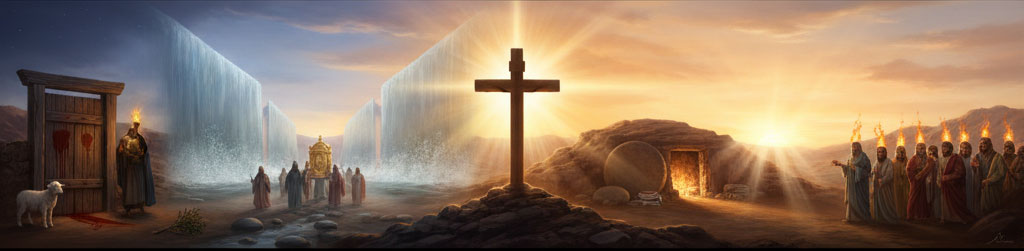
There is a remarkable thread woven through Scripture that is easy to miss on a casual reading. Certain events are not only connected by theme, but by timing. Across centuries, key moments in God’s redemptive work fall on the same days of the biblical calendar. When these are placed side by side, a pattern emerges that is both structured and deeply meaningful.
This pattern is especially clear in the spring calendar, beginning with Passover and extending through Firstfruits and Pentecost. These dates do not merely mark events. They reveal a consistent rhythm of redemption, fulfillment, and new life.
Nisan 10: The Moment of Selection
The pattern begins on the tenth day of the first month.
In Exodus 12:3, each household in Israel is commanded to select a lamb. This lamb is to be without blemish and set apart for sacrifice. This act marks the beginning of deliverance from Egypt.
Centuries later, in Joshua 4:19, Israel crosses the Jordan River on this same date. This is not a random detail. The people who were once delivered from slavery are now stepping into their inheritance.
In the Gospels, this same day aligns with the Triumphal Entry of Jesus into Jerusalem. According to John 12, this occurs just days before Passover. Jesus presents Himself publicly, entering the city as the one who will soon be sacrificed.
Across these events, the meaning is consistent. Something is chosen, set apart, and brought into view. Deliverance is about to begin.
Nisan 11 to 13: The Period of Examination
After the lamb is selected in Exodus, it is kept for several days. It must be examined and found without defect.
In Joshua, this period corresponds with preparation and covenant renewal. The people consecrate themselves as they prepare to live in the land.
In the final week of Jesus’ life, He is questioned and challenged by religious leaders. His teachings are scrutinized. Yet no fault is found in Him.
This period is quiet but essential. What has been chosen must be proven.
Nisan 14: The Day of Sacrifice
The fourteenth day marks Passover.
In Exodus 12:6, the lamb is slain. Its blood becomes the means of protection. Judgment passes over those who are covered.
In Joshua 5:10, Israel celebrates Passover in the Promised Land for the first time. The transition from wilderness to inheritance is complete.
In the Gospels, this same moment aligns with the crucifixion of Jesus. Paul later writes in 1 Corinthians 5:7, “Christ, our Passover lamb, has been sacrificed.”
The pattern reaches its central point here. Deliverance comes through sacrifice.
Nisan 16 to 17: Firstfruits and New Life
Immediately following Passover is the Feast of Firstfruits. According to Leviticus 23:10 to 11, the first portion of the harvest is presented to God. It is a sign that more is coming.
This moment also appears earlier in Scripture. In Genesis 8:4, the ark comes to rest on the seventeenth day of the seventh month. When the calendar is later reoriented in Exodus, this aligns with the first month. The resting of the ark marks the end of judgment and the beginning of a renewed world.
In Joshua 5:11 to 12, Israel eats from the produce of the land for the first time. The manna ceases. They are no longer sustained by wilderness provision but by the fruit of their inheritance.
In the New Testament, this is the time of the resurrection. Jesus rises from the dead and is called the “firstfruits” in 1 Corinthians 15:20.
Here the meaning is unmistakable. After sacrifice comes life. After judgment comes renewal. The first evidence of what is to come appears.
The Fifty-Day Count to Pentecost
From Firstfruits, Israel is instructed to count fifty days. This period leads to the Feast of Weeks, or Pentecost, in Leviticus 23:15 to 16.
At Sinai, this season is associated with the giving of the Law. God forms a covenant with His people and gives them instruction for life.
In Acts 2, Pentecost becomes the moment when the Holy Spirit is given. The law is no longer external but written on the heart. Power is given for a new kind of life and mission.
The pattern moves from new life to empowered living. What begins as a single act of deliverance grows into a harvest.
A Unified Pattern
When these events are viewed together, a clear progression emerges:
- Nisan 10: Selection and presentation
- Nisan 14: Sacrifice and deliverance
- Nisan 16 to 17: New life and firstfruits
- Day 50: Empowerment and harvest
This pattern appears in Exodus, continues in Joshua, and reaches fulfillment in Jesus and the early church. It is not accidental. It reveals a deliberate structure in how God works through history.
Why This Matters
These connections show that redemption is not a series of isolated acts. It follows a design. The same calendar that marked Israel’s deliverance from Egypt also framed the death and resurrection of Jesus.
The consistency of these dates points to a deeper unity in Scripture. The story is moving in a single direction, and each event builds on what came before.
What begins with a lamb in Egypt leads to a cross in Jerusalem and an empty tomb. What begins with deliverance from slavery leads to new creation.
The calendar itself becomes a testimony. Time is not random. It is ordered around redemption.
In seeing these patterns, we are invited to read Scripture not just as history, but as a unified story. The same God who acted in Exodus and Joshua is at work in the resurrection, following a rhythm that reveals both purpose and promise.